
Remember when learning meant flipping through heavy textbooks or waiting for a teacher to explain things in class? Things are different now. Kids today are growing up in a world where technology is shaping how they learn, and AI is leading the way. As a parent, it’s natural to wonder: how can something as advanced as artificial intelligence actually help my child? Is it safe? Will it make learning better, or just more complicated? These are the same questions every parent has when faced with something new. The good news? AI isn’t here to replace traditional learning. It’s here to make it better. Think of it as a personal tutor, a creative partner, or even a helping hand for busy parents like you.
AI tools for education are not as complicated as they might sound.
At its heart, it’s about using smart technology to make learning more personalized, engaging, and effective. It’s not about robots taking over classrooms, it’s about tools that help children learn in ways that feel natural and supportive.
In simple terms, AI isn’t replacing teachers or traditional education.
Instead, it’s a partner in making learning more accessible, fun, and effective for kids everywhere.
Now that we understand what AI in education is, let’s explore how it benefits your child’s learning experience.
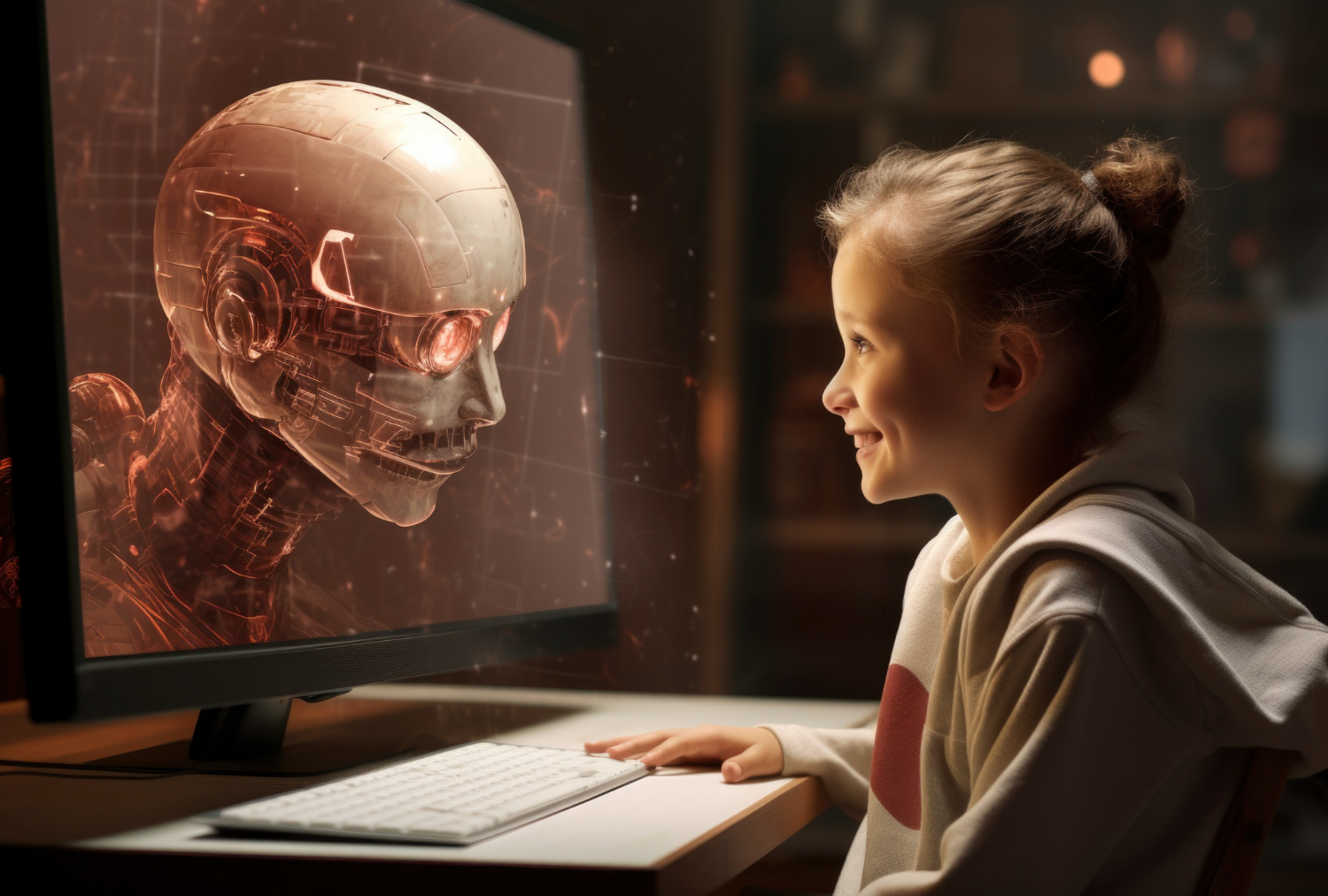
Think of AI as the ultimate sidekick in your child’s educational journey. Whether it’s simplifying tough subjects, providing instant feedback, or acting as a personal tutor, AI is here to make learning smarter, easier, and more exciting.
But the benefits don’t stop there.
One of the most remarkable benefits of AI is its ability to adapt to individual learning needs.
Such tailored approach not only enhances learning outcomes but also builds confidence and fosters a love for education.
Waiting for test results or feedback from teachers can slow a child’s learning progress. AI changes this by providing immediate feedback on assignments, quizzes, and even creative tasks.
For example, AI can evaluate a math problem as soon as it’s submitted, pointing out where your child went wrong and explaining how to solve it correctly. Similarly, in writing assignments, AI tools can identify grammatical errors and suggest better phrasing.
A constant loop of feedback keeps learning fresh, responsive, and impactful.
Learning can sometimes feel monotonous and boring, but smart AI-tutors transform it into an engaging, interactive experience.
Imagine your child solving science problems by experimenting in a virtual lab or exploring historical events through immersive simulations.


Making even the most complex topics exciting and approachable.
These interactive methods not only enhance understanding but also make learning something children actively look forward to.
AI is a game-changer for children who face unique learning challenges.
Its tools are designed to create an inclusive environment where every child can thrive:
These innovations help children overcome barriers to learning and build the skills they need to succeed.
Education goes hand in hand with a child’s physical and mental well-being.
AI ensures that children stay balanced and healthy while learning by encouraging good habits:
By fostering these healthy habits, AI supports a holistic approach to education that prioritizes the child’s overall development.
AI empowers parents by keeping them informed and involved in their child’s education. With detailed progress insights and personalized suggestions, parents can better support learning at home.
Here’s what AI offers to parents:
This collaborative approach strengthens the connection between parents, children, and educators, creating a more supportive learning environment.
AI is shaping the skills children need for tomorrow’s workforce. It introduces them to emerging fields like advanced topics such as: coding, robotics, and data analysis, while encouraging creativity and problem-solving.
Moreover, AI tools for students help children develop adaptability by presenting real-world scenarios where they must think critically and come up with solutions, building confidence in tackling challenges beyond the classroom, preparing them for industries like robotics, data science, and engineering.
Bottom Note: As a parent, embracing AI in your child’s education means empowering them with the skills and confidence they need to thrive.
AI’s role in education is just beginning, with immense potential to reshape learning.

Future of AI in education could create fully personalized curriculums tailored to each student’s pace, style, and interests, ensuring that no two learning journeys are the same.
Teachers will benefit from AI automating tasks like grading and lesson planning, freeing up time to focus on mentoring and teaching. Real-time analytics could help identify learning gaps, improving classroom outcomes.
AI also holds the promise of bridging global educational divides by offering low-cost, quality learning resources to underserved areas. Immersive tools like virtual and augmented reality could provide hands-on experiences that make learning more engaging and impactful.
As technology advances, AI will support lifelong learning, adapting to learners of all ages and needs.
AI is no longer just a futuristic concept, it’s here, shaping the way children learn, engage, and grow.
As parents and educators, embracing AI means preparing children for a future where adaptability and innovation are key. While challenges like data privacy and equitable access remain, the possibilities far outweigh the hurdles.
It’s also worth noting, the future of education isn’t about replacing traditional methods but enhancing them with smarter tools and more creative solutions. With AI as a partner, we can empower every child to unlock their full potential and thrive in a rapidly changing world.

Chat With Live Agent
LIVE CHAT

Have Any Questions?
EMAIL US
Copyright © Suits360 | All rights reserved
Copyright © Suits360 | All rights reserved